
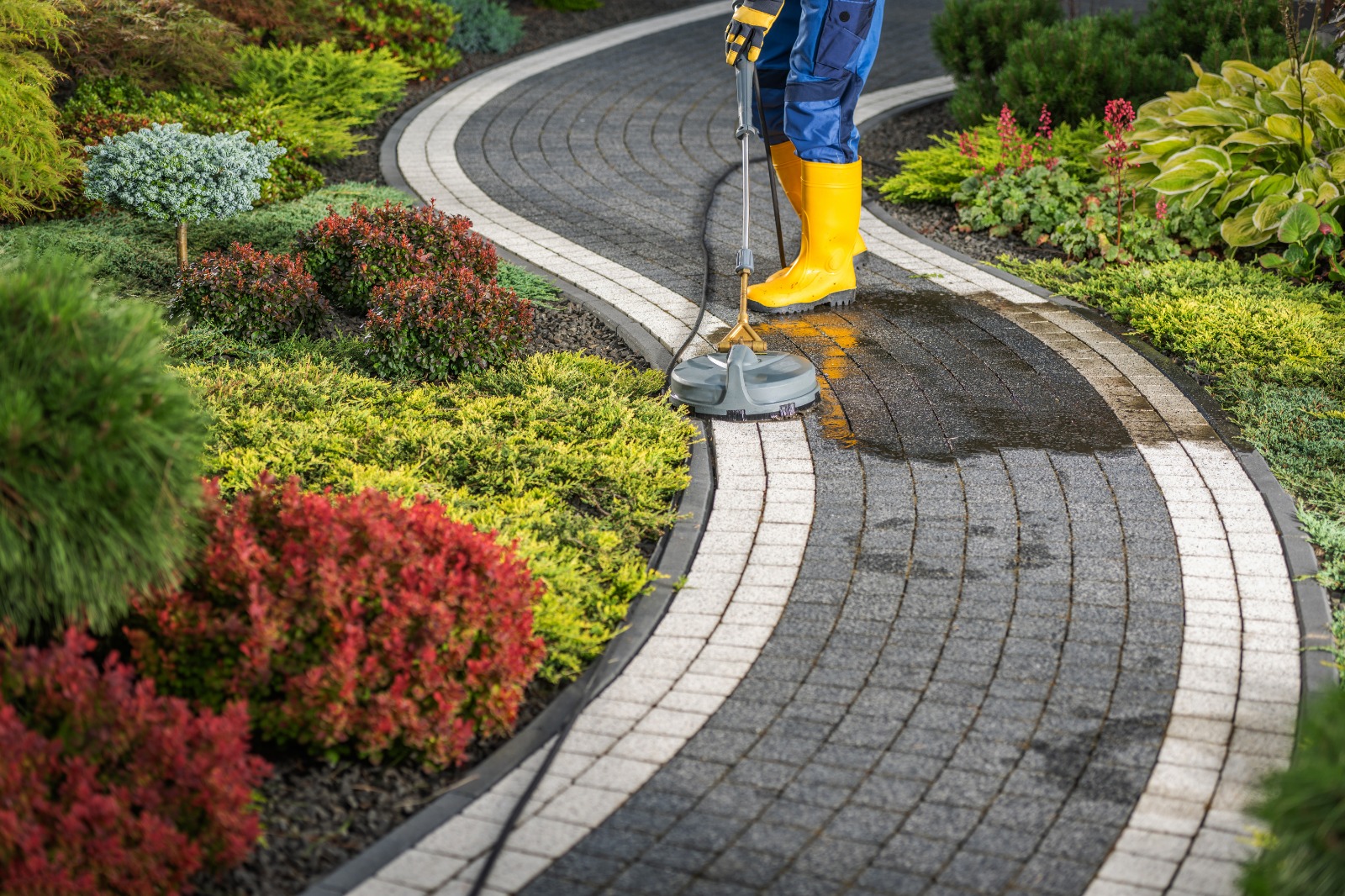
Block Patio
Block paving, also known as brick paving, is a commonly used decorative method of creating a pavement or hardstanding. The main benefit of bricks over other materials is that individual bricks can later be lifted and replaced.
Content
- Can You Install Block Paving Yourself?
- Block Patio cost calculator:
- What affects the cost of block paving?
- What is involved in installing a Block Patio?
- Things to consider when installing a Block paving
- What type of block paving you should choose?
- Cost to widen or extend your driveway
- SIZE. TIMESCALES. AVERAGE COST
- Weed killer for block paving
- Health and safety
- How can you save money on block paving?
- How to find and choose the right tradesman?
- FAQ's
- Conclusion
Can You Install Block Paving Yourself?
It’s only ever a good idea to pave your driveway if you have years of experience in doing so. That’s because a poor job can lead to sinking, increasing costs, and potential physical harm for anyone who dares to walk or drive on it. Trust us – the average price you’ll pay for block paving per m2 is worth it.
Block Patio cost calculator:
Just blocks as material will cost you from £50 to £150 per square meter.
Considering to add labour cost and time scale to your budget is essential, as price may vary, but you may expect spend up to £200 a day. Full quote and precise price you may get through the firm quote after they’ll asses your needs. Be sure you understand the time scale, for instance small path in 10 square meters will take to finish in 2 to 3 days.
The average cost of laying a patio of around 20m2 is between £1000 to £2500. But it can be as cheap as £300 for concrete or slabs.
Addition costs luckily expected as additional job such as ground preparation, It also requires excavation, and a variety of materials to give a stable foundation. You’ll need a waste skip which will be around £120 for the smallest, up to around £400 for the largest one.
What affects the cost of block paving?
Removing the old cover: The first step is removing the existing surface, whether the site is tiled or asphalt. Professional teams of stackers handle the dismantling work efficiently, using proper tools and hygiene products to remove the old covering quickly and safely.
Delivery of building materials to the site: A reliable team ensures that the customer does not need to worry about sourcing finishing tiles, cement, sand, gravel, or related materials. However, clients may also choose to order materials directly from suppliers if they prefer.
Foundation preparation: Preparing the base depends on the intended use of the area. A footpath may only require shallow sod removal and sand-gravel backfill, while areas designed for vehicle traffic require a much stronger foundation and possibly concrete pouring. Stronger foundations increase both material and labor costs.
Removal: Costs may also include soil removal. The dimensions and thickness of paving slabs influence the type of base required. Thin concrete tiles need a lighter foundation, while heavy granite paving requires a solid base capable of withstanding greater weight and pressure.
Preparation: Preparation work includes laying geotextiles to prevent materials from mixing, which increases the service life of the paving. The base must also be carefully compacted to prevent sagging over time due to environmental and load factors. These steps are included in the overall price.
Permits: In some cases, you may need permission from the local authority before making landscape changes. Regulations vary depending on the area and project type.
Location: Costs vary significantly depending on your location. For example, installation in London may cost around £4,500, whereas prices may be lower in the South, South-West, or Midlands due to regional pricing differences.
Size: Paving slabs are manufactured according to standard dimensions. Choosing standard sizes is important to avoid alignment issues during installation, especially when creating complex patterns or decorative designs.
Curb: Curbs serve to separate sidewalks from roads and strengthen the edges of paved areas. Their size and height vary depending on the application, such as pedestrian paths, cycle lanes, or lawn borders, and they help prevent grass from spreading onto paved surfaces.
What is involved in installing a Block Patio?
Typically, the cost of laying paving slabs includes:
soil research, measurements, images of the site;
development of several options for projects with a full calculation of the price, so that the client can choose any of them, commensurate with their material capabilities;
dismantling the old cover;
delivery to the installation site of the necessary equipment and a set of building materials;
ground preparation;
performance of all works;
final examination, delivery of the project to the client;
warranty service.
Things to consider when installing a Block paved driveway.
Block pavement consists of small building components available in multiple colours and shapes that allow you to create the design of your dreams. A platform for a car made of paving slabs appears in almost every yard. This is an economical and beautiful type of decor that has a long service life.
Minimum maintenance. One of the characteristics to consider when choosing a driveway material is the level of maintenance required. The access road is a high-traffic area that is constantly exposed to natural elements and daily wear and tear. If you keep your car parked in your driveway, the plates can be under continuous pressure for hours. In addition, traces of oil, gasoline, and detergents may remain on the surface.
Paving slabs are available in all kinds of shapes, patterns, colours, and sizes. In this way, you can create a characteristic area that matches the style of your home.
Plate thickness. The paving slab car area must be strong enough to support the weight of the vehicle. To do this, you must have a tile with a thickness of at least 50 mm.
The base of the slabs is just as important as the paving stone itself. Without a stable base, they will be prone to moving and adjusting, which can damage the driveway.
Paving stones have a porous structure, which means that water and ice can penetrate into the base. The fluid can also carry corrosive chemicals that can greatly shorten the life of the pavers.
What type of block paving you should choose.
Concrete block patio this is a form of paving slabs that is universal for any design of roads, private houses, amusement parks, personal plots, car parking lots and other areas. Paving slabs is a wide range of colours, which allows you to make the desired area bright, the geometry of the tile itself and the classic look, reminiscent of the shape of ordinary building bricks. After all, paving slabs are more and more often found with asphalt road surfaces, because the tile can be easily dismantled with separation by laying in place.
Expect to pay for square meter around £20 just for blocks.
Brick block patio cost - block paving driveway or footpath surface is slightly larger than normal household building bricks.
It is used for a paving of sidewalks, courtyard territories and parking’s.
It can be detected as for soft (laying on a concrete base with filling the joints between the bricks with concrete mortar.
Depending on brick type and pattern style, is around £30 – £50 per square meter.
Natural stone block cost - Paving stones made of natural stone are considered one of the most closed and stylish facades.
It is strong and suitable for all climates.
If you decide to ennoble your yard, sidewalk or even many squares.
If your site is subject to high operational loads and the area is not very small, then paving stones are a good solution, the price of which can vary greatly depending on the format, processing, type of stone.
Granite paving stones are prestigious and durable.
This option will be slightly more expensive and will cost you £40 to £80 per square meter.
Composite slabs are ideal for paving and decorative design of sidewalks, park areas, squares and territories.
This costs incurred are repeatedly paid off by the sustainable comfort and safety of the operation of products made from high-tech materials.
Composite boards are ideal for hard coating of industrial facilities, livestock and warehouse complexes, car repair shops, car washes and other outbuildings.
Price per square meter would start from £15 to £25.
Cost to widen or extend your driveway
The typical cost to extend a driveway is between £150 - £195 per square meter it will cost more than a new drive as you would need to overlay the entire drive to avoid joints including excavation, supply and labour.
Cost of maintaining and cleaning block paving
Carefully care for paving slabs is necessary throughout the year. And not only when dirt, clay, snow, etc. got on it. Preventive maintenance of paving slabs will never be called that. It exactly matches the washing of the entire surface of paving slabs using gentle chemicals. This will greatly assist you in extending the life of paving slabs and maintaining its shape, colour and pattern. The average cost of cleaning and sealing a driveway is around £10.50 per square meter. Cleaning company will assess the area, measure up the driveway and give a you a quote.
Weed killer for block paving
This is a major issue in block paving as deep-rooted undergrowth can work their way into joints where the sand’s eroded and blasted clear. The best plan of attack is to kill off tough growth at the root with the top weed killer for paths and drives.
-
Manual weeding between block paving
Nothing gets rid of a weed for good like manual labour. Pulling the weed out by the root will ensure a more effective removal. It may feel tedious but you will have longer-lasting results this way.
-
Use white vinegar to kill weeds between block paving
White vinegar is readily available, cheap, and an effective weed killer for block paving. It dries out weeds on contact – you can use white vinegar on younger weeds or vinegar with a higher concentration for older weeds, such as weed killer vinegar, which can be picked up at any garden shop/supermarket.
-
Use boiling water to kill weeds between block paving
A good way to kill weeds and prevent germination is to boil your kettle and pour the water between your patio slabs. Repeat until you have doused all pesky weeds.
-
Use saltwater to kill weeds between block paving
Make a saltwater solution of 3 parts water and 1 part salt, and mix together. Pour this saltwater solution between your patio slabs. As the weeds start to die, pour some dry salt over areas where there are lots of weeds.
-
Use baking soda to kill weeds between your block paving
Sprinkle baking soda over your patio and sweep it into the gaps between the slabs, then hose down with water.
-
Power wash between patio slabs to prevent weeds
Power washing between the patio slabs once the weeds have been removed will get rid of any seeds or roots that are still there. To keep your patio free from weeds, power wash your patio after weed removal. Hold the power washer hose over the patio gaps for 30 seconds before moving onto the next area.
-
Sweep patio to prevent weed growth
By sweeping your patio once a week, you can brush away any seeds that may have fallen between the gaps of your slabs. This will stop the seeds from settling and growing into big ugly things.
-
Use polymeric jointing sand to seal the gaps in patio slabs
This sand is a great weed preventative, all you need to do is sweep the powdered sealant between the gaps in your patio and lightly spray with water to let the sealant bond.
Health and safety
- The organization of work requires compliance with safety measures: The workplace is freed from foreign objects. If the slab is laid on a concrete base, the notches are made with goggles. All work is carried out in rubber gloves so that the skin is not injured and corroded by the cement mortar. The sorting of the material and the processing of the edge of the tile is carried out in tight gloves. Knee pads are used to protect the legs.
- Workers involved in laying paving slabs are required to know and adhere to technical and sanitary norms and rules, take into account safety requirements. The place of work should be fenced off, and at night the installation of signal lamps should be provided. Working outdoors in winter requires those responsible for the safety of work to follow special regulations.
- Only specially trained persons are allowed to use electric and pneumatic tools. Without exception, all employees of the brigade must know and follow the rules for the safe use of cutting tools. All workers on site must be provided with suitable clothing and PPE (safety goggles and work gloves). The use of shovels and hammers in the work provides for the serviceability of the tool - the integrity and reliable fastening of the handles to the working parts.
Building regulations for a block paving driveway
In general, you do not need any additional approvals. Most building regulations do not apply to paving. But you may need to be aware that there are some regulations that paving work may need to meet.
Drainage requirements for the building and Access to the property.
How can you save money on block paving?
- You decided to save on laying paving slabs, keep the tiles cheaper. Not increased savings on the very process of laying tiles, because this is a very early wear and damage to paths and sites.
- Adhere to the rules for preparing the soil for laying paving slabs, and do all the preparatory steps properly, otherwise, after a short time, the paths will begin to crumble. Crushed stone, sand, geotextiles, reinforcing mesh, use in the correct order and in the right amount. In order to save money, before purchasing materials, do not forget to take into account the amount of paving slab waste that is always generated.
- Get quotes from few service providers, check pros and cons and make a best choice for you and your estimated budget.
- Always remember that approximately 30-40% of the cost of paving on the site is paid for the work of the craftsmen.
The only moment where you can "save" your wallet is to learn how to lay paving slabs on your own, because approximately 30-40% of the cost of paving on the site is paid for by the work of the craftsmen. To do this, you need to carefully study the technology of laying paving slabs, and you will be able to bring to life all the most daring design ideas of landscape design on your site. But keep in mind that you will need special tools.
How to find and choose the right tradesman?
A reliable tradesman rarely needs advertising, and the demand for his work often exceeds the capabilities of the master. Instead of searching for ads, the first thing to do is to ask friends and relatives for the phone number of a specialist.
If it is well developed in the immediate environment, then it stands for distant acquaintances, even with the help of forums or social networks. Here, too, you can get confirmation of the qualifications of a tiler from a neutral person.
The first meeting with the master, whom you have chosen according to a preliminary assessment, largely determines the style of cooperation. Right now, it is important to talk about ways to solve pressing issues. It is worth not only to find out the qualifications of the tradesman regarding the laying of block paving, but also to find out if he makes waterproofing and whether he is familiar with the intricacies of mounting and cutting the material. It is equally important to talk about the behaviour during the acceptance of works and decide who will be responsible for possible alterations.
A good specialist will readily correct all justified claims himself and at the same time will not guarantee perfect quality without a thorough check of the object. Naturally, such a master will not take on another order until he closes all the issues at your facility.
If you purchased the material from a store that also offers installation services, then it makes sense to take advantage of their offer. Their masters will know exactly how to lay the tiles presented in the assortment of the store. But even if the store does not offer such services, you can still ask the sellers, as a rule, they can tell you the contacts of several craftsmen who regularly buy from them with clients.
Construction company - when a large number of works are expected, you can contact not a private trader, but a company with a large staff. The advantages of this method are that you conclude an official contract and in case of any problems you can always ask to replace the master, as well as make claims about the quality of work if it does not suit you.
Also, you should be wary if tradesman persistently criticizes the quality of the material and says that he cannot promise anything with such material. Plus, offers to buy more material. In most cases, this indicates that he is not confident in his abilities or does not have enough experience, so he immediately tries to justify future flaws and insure himself with the presence of spare elements.
FAQ's
-
What is the service life of paving slabs?
About thirty years, which is a much longer period of operation than other types of pavements.
-
Can a broken or dirty tile be replaced?
Yes, there is such an opportunity, provided that other work parameters are saved. Before replacing, you should first clean the sand from the cracks between the tiles. Tiles can be removed by hand or with special tools. After inserting new elements, it is necessary to fill the cracks with new sand and press the tiles with a rubber mallet.
-
Does frost or thaw cause damage?
No. Ice does not cause serious violations for the sidewalk. The gaps between the plates allow free movement, which prevents cracking during frost or thaw. If the laying technology is followed, the water should leave freely, and not stagnate on the tile: this also prevents the appearance of a large amount of ice.
If I need to remove a tile for a performance, can it be put back in place later?
Oh sure. Paving slabs differ from other types in that they can be removed or laid in place without much visual or functional change.
-
Can the pavement surface become slippery?
The probability of this is much less than with other types of coatings. The textured surface creates a perfect grip, which in turn makes it easy to walk or drive even in wet weather.
CONCLUSIONS
By investing in a quality material for your driveway, you would create a striking impression on the minds of the pedestrians or guests and have the perfect environment for relaxing or entertaining your guests in the garden and you'll enjoy its visual and practical benefits for years.
If you are looking for a surfacing option which is enduring as well as visually appealing, then block paving might be the perfect option for you.
A driveway can improve your property valuation outcome by a solid margin. It can increase your property’s value anywhere between 5% and 10%. Your home will stand out from the others on your street, making it more sought after in the eyes of prospective buyers, perfecting if you’re thinking of selling your home at a later date.